Key takeaways
- Two gate prices, roughly seventeen times apart. On the ASI’s own published rates, an Indian citizen pays about ₹35 for day entry and a foreign tourist about ₹600, with the museum composite adding about ₹5 or ₹50 on top and children under 15 free. Those rates are the ASI’s to change, so treat every figure here as approximate — what a visit really costs and what the tours add on top of it.
- Closed every Monday. Day hours run roughly 9:30 to 16:30, with last entry before closing and seasonal drift at both ends. The evening sound and light show is a separate product on a separate ticket, and it is dark on Mondays too — the hours in full and how the evening show works.
- There is no dress code at the fort. Shorts are fine, and nobody at the gate is measuring anyone. Cover shoulders and knees if you are going into the mosque areas, and dress for sun and distance rather than for propriety: light full-length clothing is the practical answer to a shadeless afternoon — the dress-code question, settled.
- Take the metro, not a cab. Lal Quila station on the Violet Line is a couple of minutes from the gate; Chandni Chowk on the Yellow Line is about ten minutes through the market. From the airport, allow about an hour door to door on the Airport Express and a change — a car in Old Delhi traffic can take as long or longer, and then has to park — metro, airport and the India Gate distance.
- Give it 2 to 3 hours, and start at opening. Ninety minutes covers the headline buildings if you walk with purpose. The fort is large and shadeless in stretches, so the first hour after opening is worth two of any hour after noon — how long a visit takes and the best time to go.
What the gate ticket gives you, and what a guided tour adds
Read these two lists next to each other before you spend anything. The left-hand column is enough for a great many people, and I would rather say so here than after you have paid me a commission.
What the ASI ticket alone gets you
- Entry through the Lahori Gate side, the great west gate that faces Chandni Chowk, and the run of the grounds inside — what is actually in there
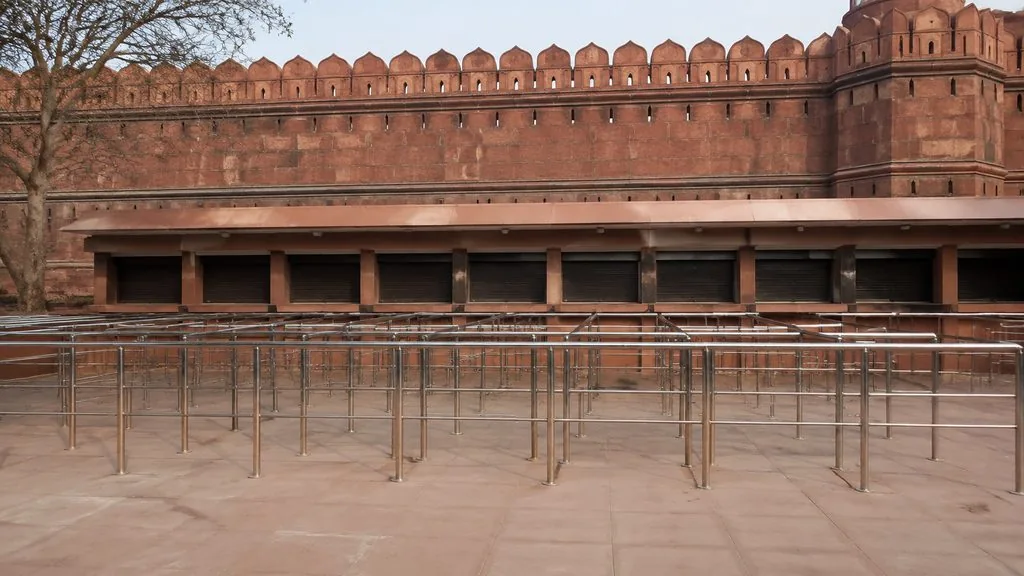
- Tickets at the gate or online from the ASI. Queues at midday are real, and worst at weekends and on public holidays
- The buildings, unlabelled. Signage is thin and inconsistent, so the Naubat Khana is a doorway and the Diwan-i-Am is a handsome arcade with nothing to tell you what happened under it
- Museums in the barracks buildings, which most people walk past entirely because they are looking for palaces
- No shade for long stretches, no water on you unless you brought it, and a great deal more walking than the map suggests
What a guided product adds — and what it does not
- Someone who knows the order to walk it in and what happened in each building, which is the whole of the value here — the guided options compared
- Skip-the-line entry, on the options that include it. That is worth most on a Sunday at noon in June and close to nothing at 9:30 on a Wednesday in January — when the queues actually bite
- The cheapest listing here is guide-only. Entry, a rickshaw, extensions to Jama Masjid and Chandni Chowk and hotel pickup are all add-ons you choose at booking — that listing, reviewed in full
- Hotel transfers both ways on one option, which buys away the getting-there problem on a first day in Delhi and buys nothing at all if you are happy on the metro — the transfer option, reviewed
- Not the evening show, which is its own ticket at the fort on its own schedule, and not a Monday, because nothing runs on a Monday — the show, explained
The visit, in order
The walk almost every visitor makes, in the sequence the fort lays it out. Guided or not, this is the shape of the morning.
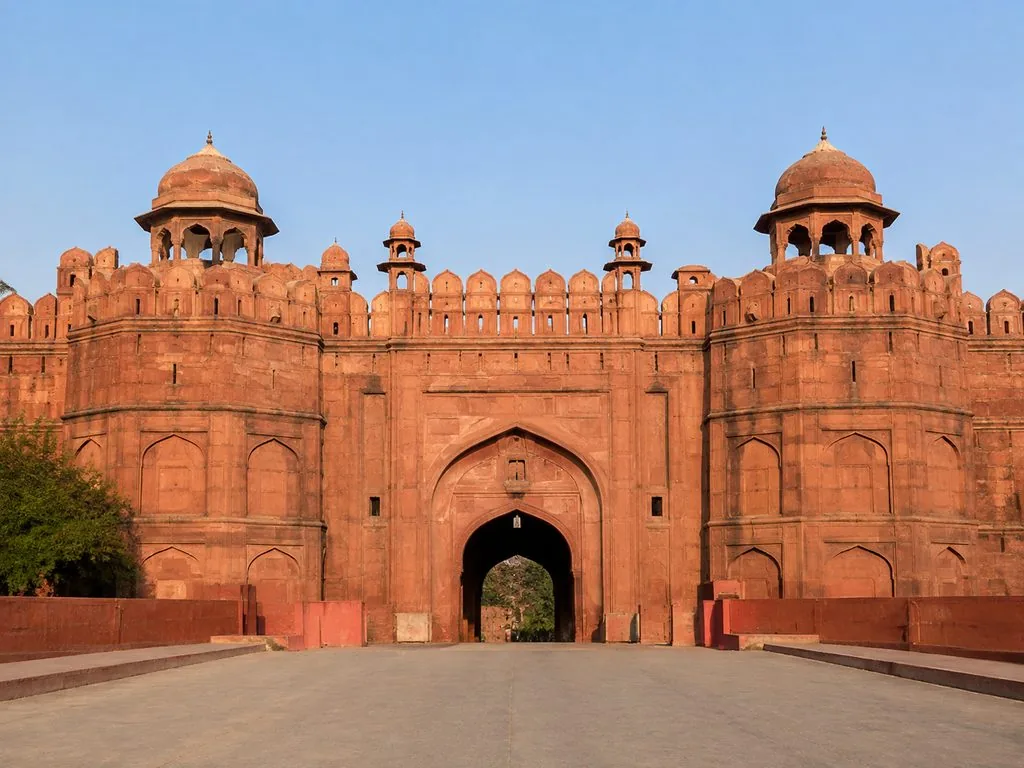
Everything starts on the same side. Visitors go in on the Lahori Gate side, the west face that looks straight down Chandni Chowk, and the route runs west to east across the enclosure before it lets you out towards the market again.
- The Lahori Gate side — The great west gate, facing the market. This is where the Prime Minister speaks on Independence Day, from the ramparts above the arch — why the fort matters to the republic.
- Chhatta Chowk — The covered bazaar just inside, a vaulted arcade of shops. It was the court’s own market once, and it is still the coolest few minutes of the visit in June.
- The Naubat Khana — The drum house, where musicians announced arrivals and where everyone below a certain rank got off their elephant and walked. Most people photograph it without knowing that.
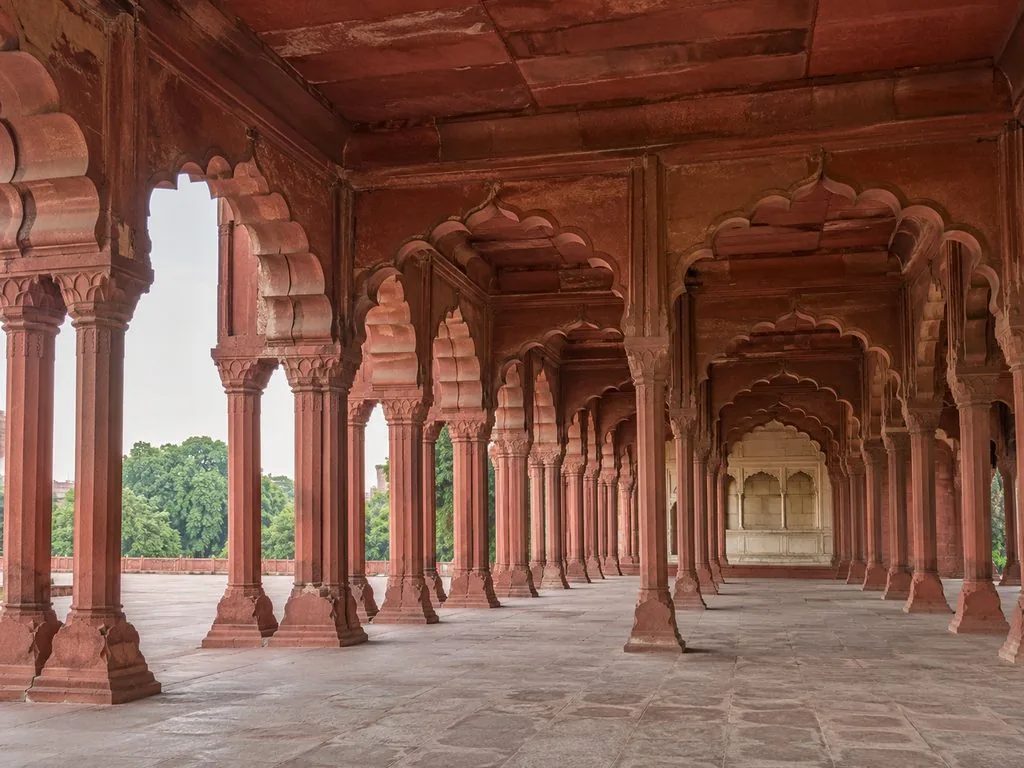
- The Diwan-i-Am — The hall of public audience, with its scalloped red arcades. This is the room the emperor heard petitions in, and it is the single building a guide changes most — what to look for inside.
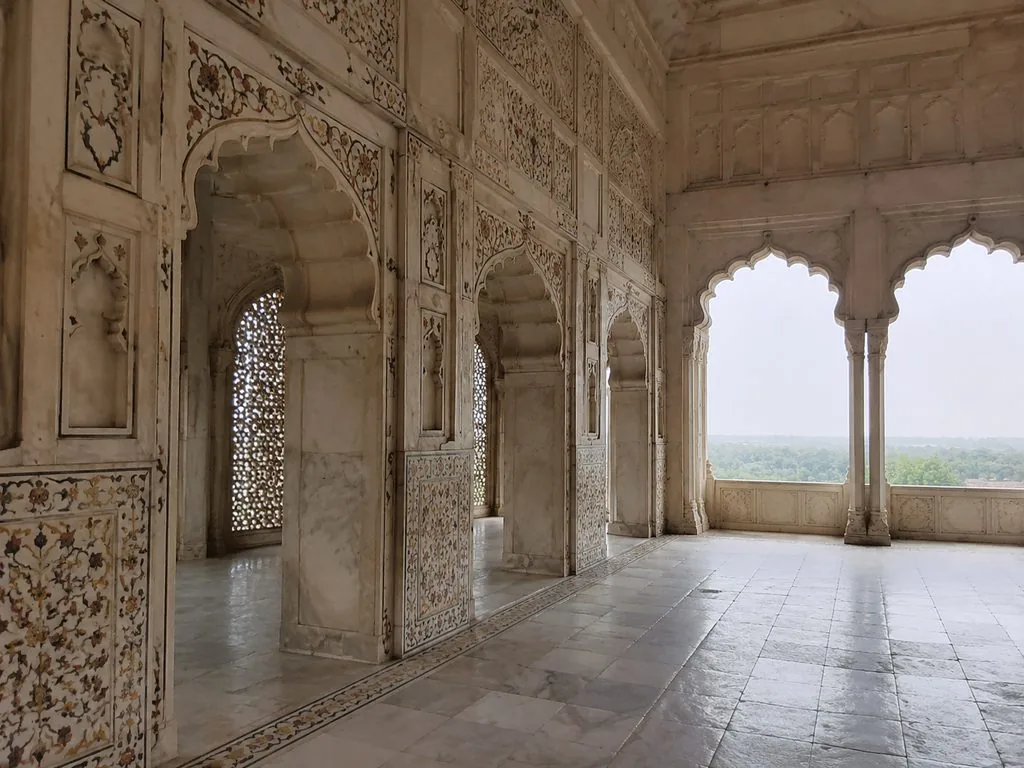
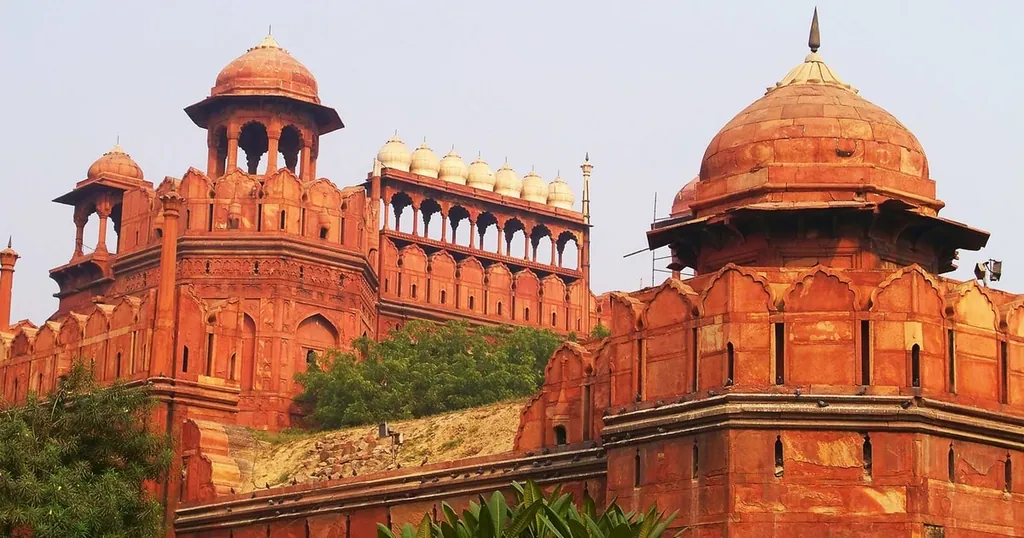
- The marble palaces along the east wall — Diwan-i-Khas, Khas Mahal and Rang Mahal, strung along the wall that once looked over the river. Red sandstone outside, white marble here, which is why the marble-or-sandstone question has two correct answers.
- Moti Masjid and the gardens — The Pearl Mosque and the surviving garden ground. Cover shoulders and knees for the mosque areas, which is the only place the question comes up at all — what to wear.
- The museums, if the day is holding up — Housed in the barracks the British put up after 1857, when much of the courtly interior was cleared. That clearance is also why the gardens feel thin.
- Out to Chandni Chowk — Back through the Lahori Gate and straight into the market for the afternoon, which is the classic Old Delhi day and the one I give visiting relatives — the fort morning, market afternoon plan.
Two to three hours covers all of that comfortably; ninety minutes covers the headline buildings if you keep moving and skip the museums — how long to allow.
How to decide, in four steps
Settle the passport question first
Indian citizens are buying guiding here and nothing else. Foreign visitors are weighing a small premium over the gate rate. Those are two different decisions.
Pick your day, and make it a Tuesday to Sunday
Monday is closed, morning beats afternoon, and October to March beats May and June by a distance the weather app will confirm.
Decide what you want handled
A guide only, a guide with the ticket and the queue included, a small group, or a car at your hotel door. That choice narrows six listings to two.
Trust the widget, not this page
Every figure printed here is a from price that moves with the date and the party size. The live availability below is the number you will actually pay.
Check dates for the tour I recommend by default
Skip-the-line entry ticket and a guided tour, one price, no add-on arithmetic to do at checkout — which is why this is the listing I point most foreign visitors at. From $13 a person, rated 4.5 from 54 reviews, the largest review pool of the four fort tours here. If you are an Indian citizen, read the gate rates first: the guiding on its own may be all you need — this tour, reviewed in full.
Guide only, guide with the ticket, or a car at your hotel?
The three listings that cover most decisions at this fort. Prices, ratings and review counts are the live GetYourGuide figures, and every price is a from price that moves with the date. Read the entry row before you read the price row.
| Red Fort Guided Visit with Optional Entry & Add-Ons | Start hereRed Fort Skip-the-Line Entry Ticket & Guided Tour | Red Fort Skip-the-Line E-Tickets & Guide with Delhi Transfers | |
|---|---|---|---|
| Price | From $5 / person — guide only, entry not in that figure | $13 / person | $34 / person |
| Entry ticket included? | No — add-on. The $5 headline is guide-only; the entry ticket is chosen and paid for as an add-on at booking, along with a rickshaw, hotel pickup and the Jama Masjid and Chandni Chowk extensions | Yes. Skip-the-line entry is in the price, which is the whole argument for it | Yes. E-tickets are issued ahead of the day |
| Skip-the-line | Not on the guide-only price | Included | Included |
| Transfers | Hotel pickup available as a paid add-on | None — you make your own way to the gate, which the metro does well | Hotel transfers both ways |
| Duration | 1.5–2.5 hours | Around a fort morning | A fort visit plus the driving either side |
| Who it suits | Anyone who only wants the guiding — which includes almost every Indian visitor, since the gate ticket is cheap and this is the cheapest way to add someone who knows the buildings. Guides work in English and Hindi and make contact on WhatsApp beforehand; you meet at the Lahori Gate. 4.6 from 51 reviews — reviewed in full | Most foreign visitors, most days. Ticket, queue and guide in one line item, and a genuinely small premium over the foreign gate rate. 4.5 from 54 reviews — reviewed in full | A first day in Delhi, an early flight, or anyone who would rather not solve Old Delhi traffic on arrival. If you are comfortable on the metro you are paying for a car. 4.5 from 50 reviews — reviewed in full |
| View → | Book this → | View → |
Photo Gallery
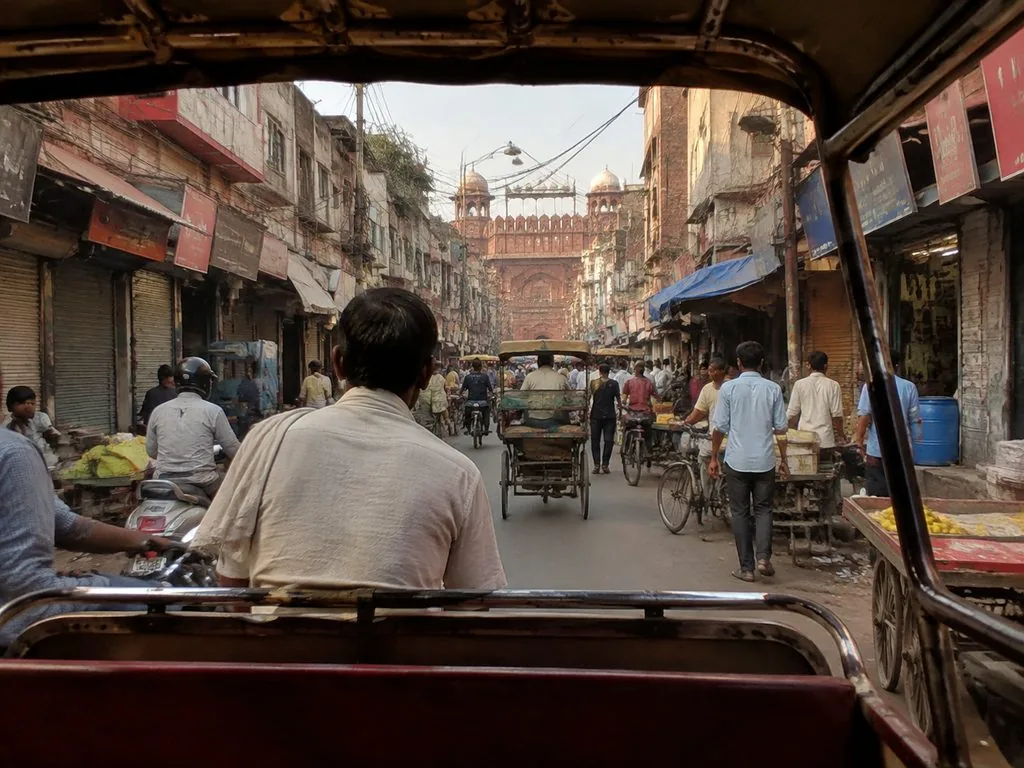
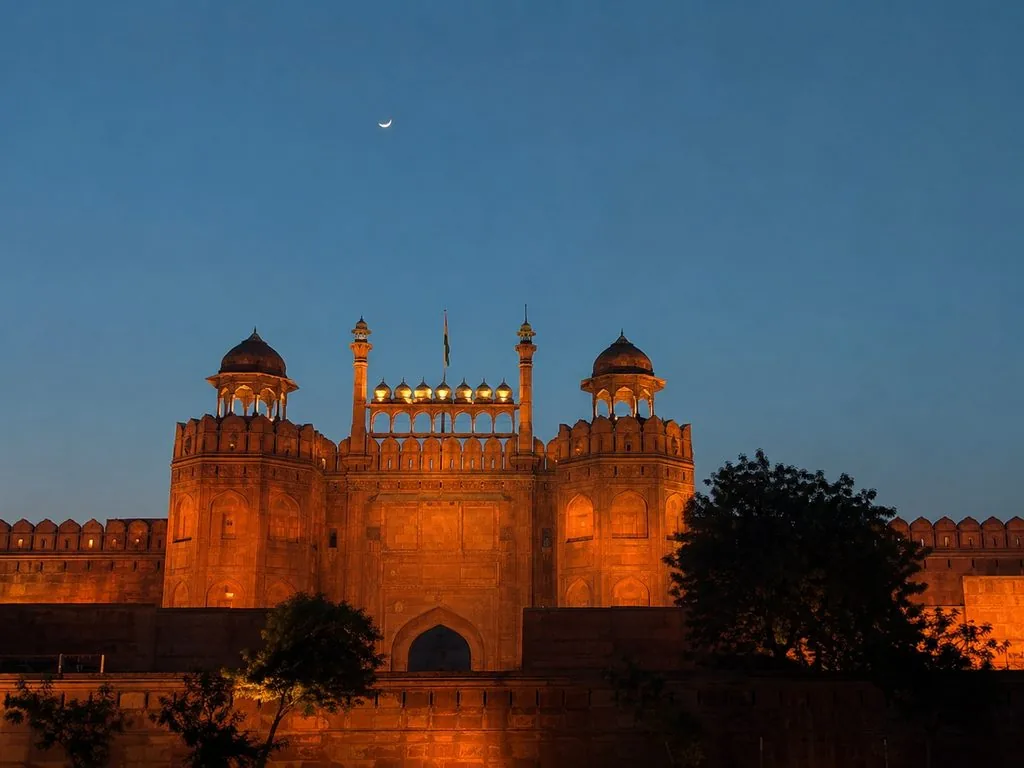
Sandstone outside, marble inside, market at the door
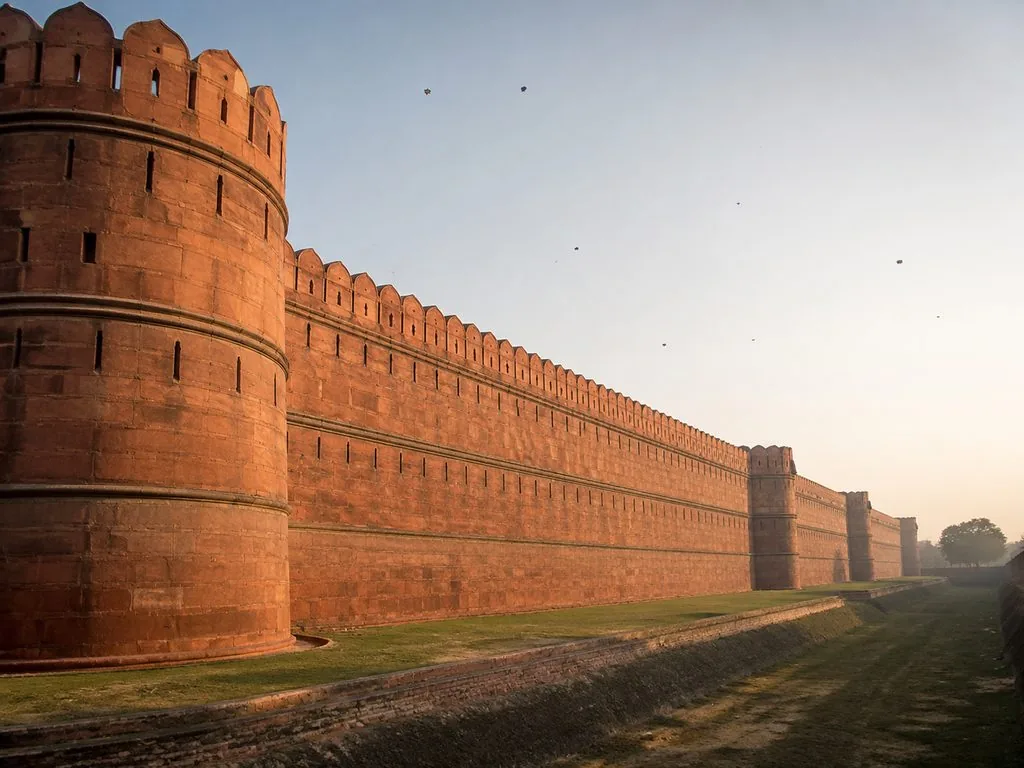
What the visit actually looks like: the gate everyone photographs, the halls most people walk past, and the street the fort has faced for nearly four centuries.
The six listings worth comparing
Four of these are fort tours, one is the evening show and one is the afternoon that pairs with the fort. Two have thin review pools and I flag it wherever they appear: the small-group tour has 27 reviews and the evening show has 15. The evening show also needs its own ticket at the fort, roughly ₹80 for Indian visitors and ₹250 for foreign ones on the ASI’s rates, and it goes dark on Mondays like everything else. Every card opens live availability, and every one has an honest review on this site.
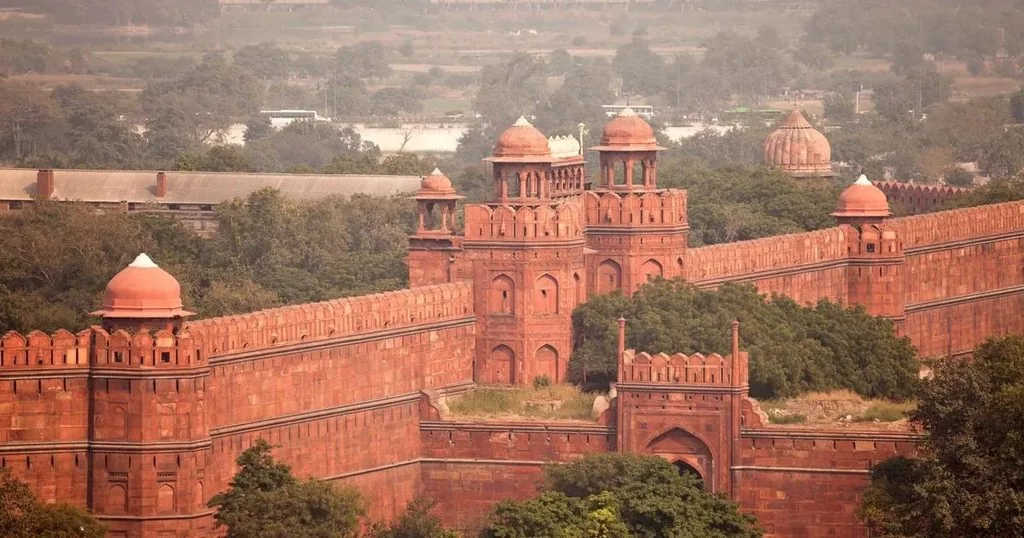 From $5 + options
Red Fort Guided Visit with Optional Entry & Add-Ons
 Skip the line
Red Fort Skip-the-Line Entry Ticket & Guided Tour
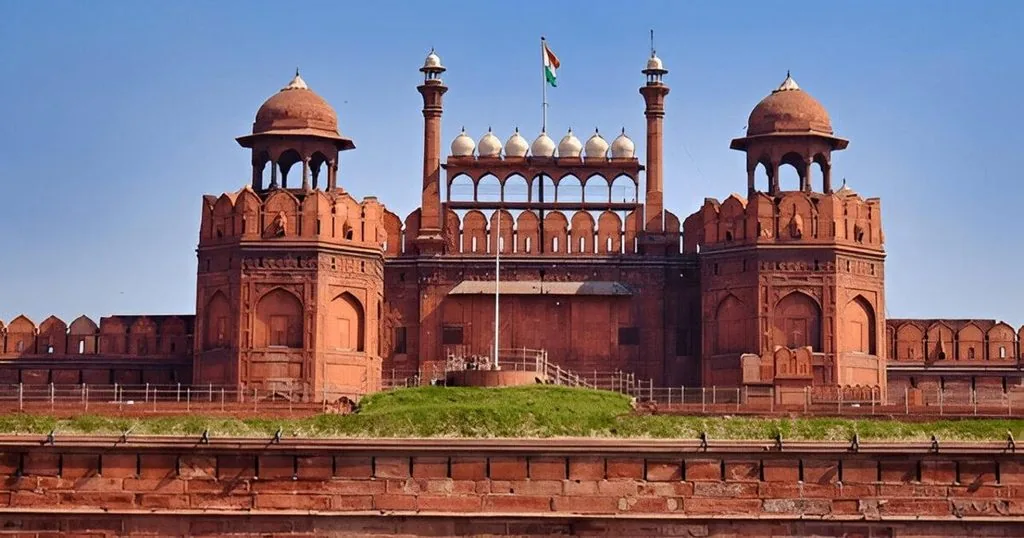 Small group
Skip-the-Line Guided Tour of Delhi’s Iconic Red Fort
 With transfers
Red Fort Skip-the-Line E-Tickets & Guide with Delhi Transfers
 Evening show
Red Fort Light & Sound Show with Private Guide
 Pairs with the fort
Old Delhi: Chandni Chowk Tuk-Tuk Tour with Street Food
What people who actually went said
Taken word for word from the GetYourGuide reviews of the six products compared here. The pattern across all of them: people remember their guide’s name.
Rambabu was our tour guide for the red fort in Delhi. He was friendly, easy-going and very knowledgeable.
Excellent Tour Guide. I learned a lot about this place.
We had a very good time with Vivek. He had not only provided us with a very detailed tour, but also had us covered.
I enjoyed learning about the buildings and the history of India.
Our guide Deepo was amazing. So knowledgeable and easy to work with and ask questions.
I had a good time on my Red Fort tour with the guide. We went right in and didn’t have to wait.
The show at the Red Fort was stunning. Our guide, Ali, was very helpful and rushed us into the show.
We had a wonderful time with Tabrej on this tour. The show was fantastic and the logistics went very smoothly.
Kabeer was very knowledgeable and tailored the tour to exactly what I wanted.
Ratings and reviews are the operators’ live GetYourGuide figures. Read our full tour reviews ›
Four things my relatives ask me in the car
I still take visiting family round the fort several times a year. These four come up on the way, every single time.
Who built it, and why does everyone photograph that gate?
Shah Jahan, the same emperor who built the Taj Mahal, as the palace-fortress of his new capital Shahjahanabad, over roughly a decade in the 1600s. The gate everyone photographs is the Lahori Gate, and the reason is modern rather than Mughal: the Prime Minister raises the flag and addresses the country from those ramparts every Independence Day, 15 August — the history, in brief and what happens around 15 August.
Is the Taj Mahal near here?
No, and this trips up more people than any other question I get. The Taj Mahal is in Agra, over 200 km away, and it is a separate day by fast train rather than an afternoon add-on. The two share a builder and a great deal of red sandstone in the public imagination, and nothing else — how people fit both into one trip.
Are there two Red Forts?
Effectively, yes, and people book the wrong city’s tickets over it. Agra Fort is also Mughal and also red sandstone, and it is the older stronghold, substantially Akbar’s. Delhi’s is Shah Jahan’s purpose-built palace city. If your booking says Agra and your hotel is in Delhi, stop and check now — the two forts, untangled.
Can I take photos inside?
Your phone and your ordinary camera are fine and nobody will stop you. Tripods and professional video rigs need permission from the ASI in advance, and drones are prohibited outright, which is worth knowing before you pack one — the camera rules in full.
Can’t make these dates?
Browse more available Red Fort tickets and find one that fits your schedule — all with instant confirmation and free cancellation.
The Red Fort, explained
The Red Fort, or Lal Qila, is the walled palace-fortress that the Mughal emperor Shah Jahan built in the 1600s as the centre of his new capital Shahjahanabad, it stands at the top of Old Delhi with its west gate facing the length of Chandni Chowk, it has been a UNESCO World Heritage Site since 2007, and it is closed every Monday of the year.
I am Arjun Mehta. I grew up in Daryaganj, fifteen minutes on foot from the Lahori Gate, and I spent two college summers working there as a licensed guide before I took an office job I mostly like. I still walk relatives round the place several times a year. So I know which halls people crowd into, which ones they stride past, and what the queue looks like at noon in June.
Why the fort sits where it does
Shah Jahan built a capital here, and Chandni Chowk is the road out of his front door. It runs west from the Lahori Gate in a straight line, and for nearly four centuries the fort has been the thing at the end of it. So put them in the same day: the fort in the morning while it is cool, the market in the afternoon when it is at its best anyway.
Two prices, and which one is yours
Here is the thing that makes this fort unusual, and the reason this site sorts you before it sells you anything. The Archaeological Survey of India charges Indian citizens one rate and foreign tourists another, and the second is something like seventeen times the first. Children under fifteen go free either way.
If you are Indian, every product on this page costs several times your entry ticket. I am not going to dress that up. Buy your ticket at the gate or online from the ASI, and if you spend anything here, spend it on the guiding alone. The fort is badly signposted, the labels are thin, and half of what makes the place extraordinary is invisible unless somebody tells you it is there. Admission is worth buying once.
If you hold a foreign passport, the arithmetic inverts. Your gate rate is already several times the Indian one, so a guided visit with the queue handled is a small premium on a ticket you were buying anyway. The cheapest listing here is guide-only, and I will keep saying so: the entry ticket on that one is an add-on you tick at booking, along with the rickshaw and the hotel pickup. If you would rather not think about it, take the option with the ticket already inside the price.
Monday, and the rest of the calendar
The fort is shut every Monday of the year. It opens Tuesday to Sunday, roughly half past nine in the morning until half past four in the afternoon, with last entry a little before closing and the usual seasonal drift at both ends. The evening sound and light show is a separate ticket bought at the fort, it starts earlier in the winter months, and it is dark on Mondays as well. I have watched families arrive on a Monday with a driver waiting and a train to catch. Check the day before you book the driver.
The walk, in the order the fort gives you
You go in on the Lahori Gate side. Immediately inside is the Chhatta Chowk, a covered bazaar with a vaulted roof that was the court’s own market and is now the coolest few minutes of a summer visit. Then the Naubat Khana, the drum house, where musicians announced arrivals and where anyone below a certain rank got down off their elephant. Then the Diwan-i-Am, the hall of public audience, with its scalloped red arcades — the room where petitions were heard, and the building a good guide transforms most.
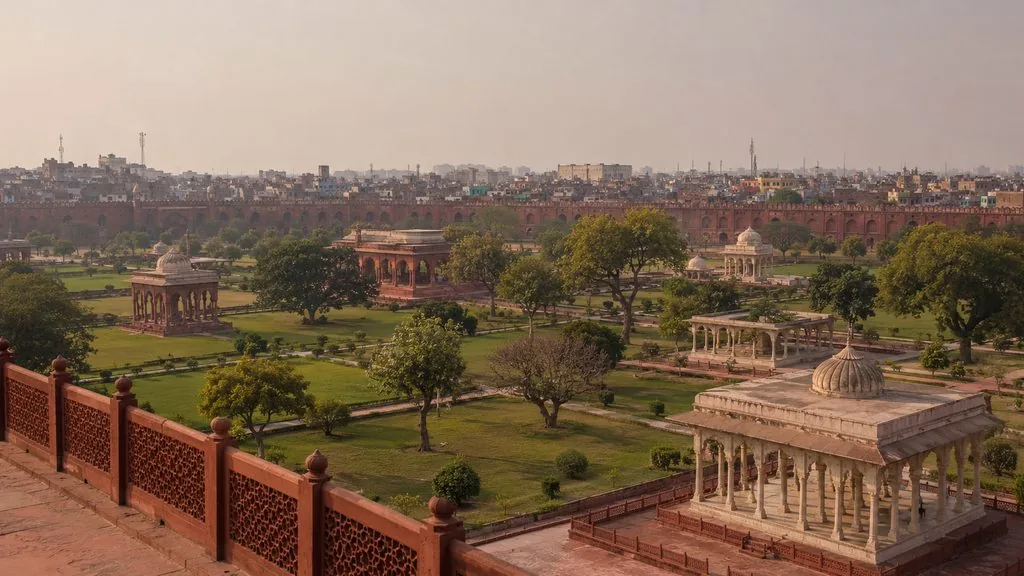
Past that, the marble palaces run along the east wall, which once looked out over the river: Diwan-i-Khas, Khas Mahal, Rang Mahal. This is where people work out that the Red Fort is red on the outside and white within, so if you have been arguing about sandstone or marble, you were both right. Then the Moti Masjid and the gardens, which feel thin because the British cleared much of the courtly interior after 1857 and put barracks where the buildings had stood. Those barracks hold the museums now, and almost nobody goes in.
What to wear, which is less than you think
The fort enforces no dress code. Shorts are fine. Nobody at the gate is inspecting hemlines, and I would like that sentence to travel, because the internet has convinced a lot of visitors otherwise. The one place it matters is the mosque areas, where shoulders and knees should be covered. Everything else is a heat problem rather than a modesty problem: the enclosure is large and shadeless in long stretches, so light full-length clothing, a hat, water and sunscreen will do more for your morning than any wardrobe rule.
What I actually tell relatives
Go at opening time. The first hour is worth two of any hour after noon, the light on the sandstone is better, and the security queue has not built yet. Give the fort two hours, three if you want the museums, ninety minutes if you are moving with purpose and only want the headline buildings. Come by metro: Lal Quila station is a couple of minutes from the gate and a car will spend longer than you think looking for somewhere to stop. Then walk out of the Lahori Gate and straight into Chandni Chowk for the afternoon, and eat something.
That is the whole plan. If you are Indian, the guide is the only part I would argue for. If you are not, take the version with the ticket in it and stop optimising. Either way, do not turn up on a Monday.
Frequently asked questions
How much does it cost to enter the Red Fort?
That depends entirely on your passport, and the difference is roughly seventeen times. Indian citizens pay a small fixed fee; foreign tourists pay many times that, with a museum composite adding a little on top for both and children under 15 free. The rates are set by the Archaeological Survey of India and do change, so treat any figure you read as approximate — both rates, set out plainly and what the tours cost on top.
Is the Red Fort closed on Mondays?
Yes, every Monday, all year, and this is the fact most likely to wreck a Delhi itinerary. The fort opens Tuesday to Sunday, roughly 9:30 to 16:30 with last entry before closing, and the evening sound and light show is dark on Mondays as well. Timings drift with the season, so confirm on the day — hours and closures and the best day and month to go.
Is there a dress code at the Red Fort? Can I wear shorts?
There is no enforced dress code at the fort, and shorts are allowed. The one place it matters is the mosque areas, where covering shoulders and knees is expected. Beyond that, dress for a shadeless walk in Delhi sun rather than for anyone’s approval: light full-length clothing, a hat and water do more for you than modesty rules ever will — the dress-code question, answered.
How long do you need at the Red Fort?
Two to three hours is a fair visit, and ninety minutes covers the headline buildings if you keep moving and skip the museums. Guided tours of the fort itself run about an hour and a half to two and a half hours. Add time for the walk in from the metro and the security queue — how long to allow and what you will be looking at.
What is inside the Red Fort?
In rough walking order from the Lahori Gate side: the Chhatta Chowk covered bazaar, the Naubat Khana drum house, the Diwan-i-Am public audience hall with its scalloped red arcades, then the marble palaces along the east wall — Diwan-i-Khas, Khas Mahal and Rang Mahal — plus the Moti Masjid and the gardens, with museums in the barracks buildings — the walk, building by building.
What is the nearest metro station to the Red Fort?
Lal Quila on the Violet Line, a couple of minutes’ walk from the gate. Chandni Chowk on the Yellow Line is about ten minutes away through the market and is the more interesting arrival if you have the time. From the airport, take the Airport Express to New Delhi and change; allow about an hour door to door — getting there, including India Gate distances.
Are there two Red Forts in India?
Not quite, but the confusion is understandable and it costs people money. Agra Fort is also Mughal and also built of red sandstone, and it is the older stronghold, substantially Akbar’s work. Delhi’s Red Fort is Shah Jahan’s purpose-built palace city. Different cities, different characters, and easy to book the wrong one — Delhi’s fort or Agra’s.
Is the Red Fort close to the Taj Mahal?
No. The Taj Mahal is in Agra, over 200 km from Delhi, and reaching it is a day of its own by fast train. Shah Jahan built both, which is why they turn up in the same sentence so often, but you cannot see one in the morning and the other in the afternoon — fitting the two into one trip and what to do with the rest of your Delhi day.
Still have questions? Email us [email protected]